

Why Do You Have a Closet Full of Clothes but Still Feel Like You Have Nothing to Wear?
A closet full of clothes, yet nothing to wear? The problem might not be how much you own, but how well your clothes work together. Discover why your wardrobe feels overwhelming and how to create outfits that make getting dressed easier.
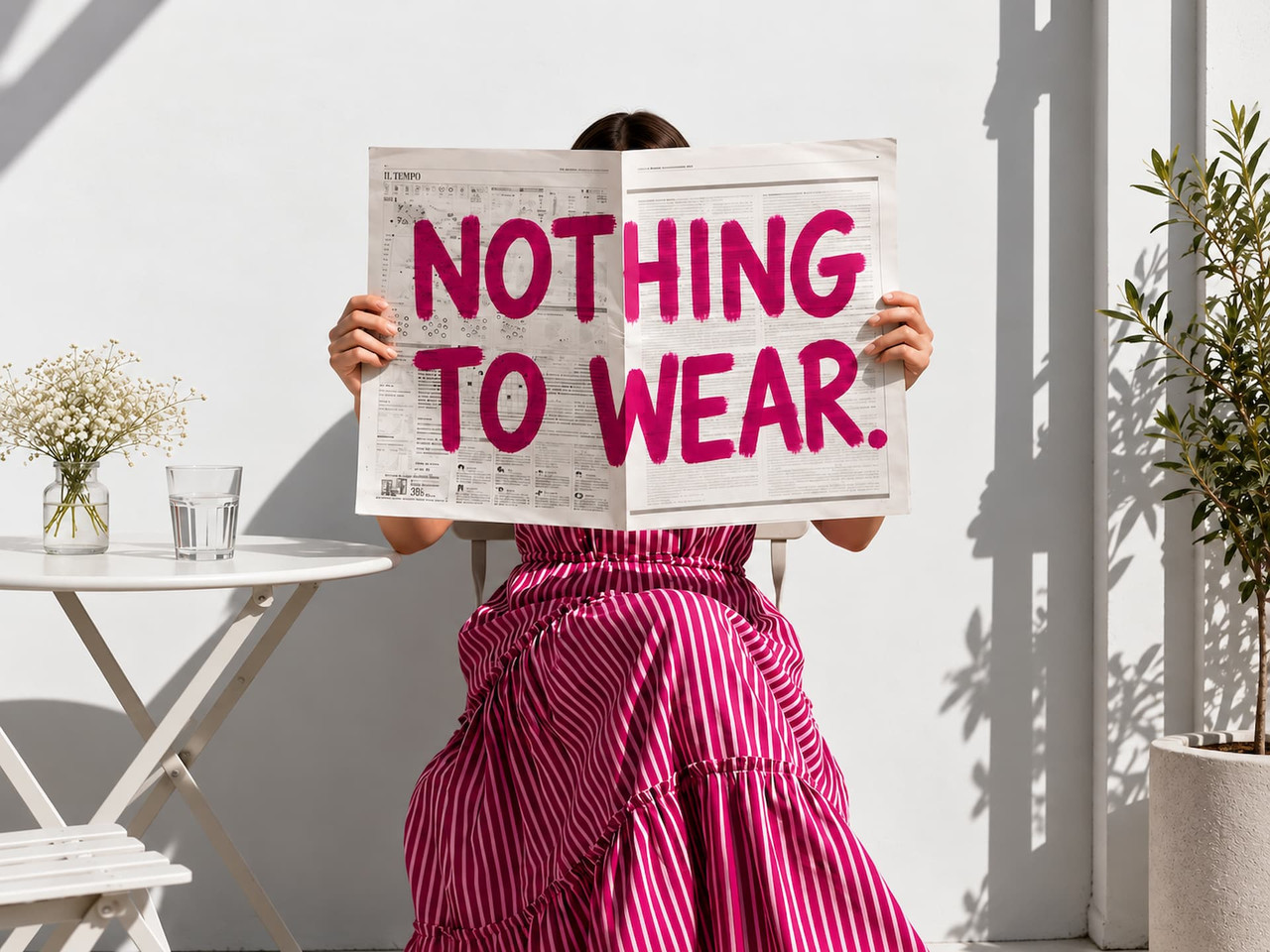
Why Do You Have a Closet Full of Clothes but Still Feel Like You Have Nothing to Wear?
You look inside the closet. The hangers are lined up side by side. There is a shelf of folded sweaters, a drawer that won’t even close, possibly some shoes on a rack below that. From an objective standpoint, you have enough clothing. But still you stand there for ten minutes, take three items out, put them back and eventually walk out of the house wearing the same three outfits you have worn all along.
If this sounds familiar, you’re not alone, and you’re not overreacting either. Owning a closet full of clothes, nothing to wear is one of the most common and most misunderstood dressing issues. It has little to do with the amount of clothing. It has everything to do with the relationship between the pieces you own.
The Real Problem Isn't How Much You Own
Any suggestions on how to deal with a full but non-working wardrobe tend to immediately say "get rid of stuff," or "avoid purchasing things." That is true but misses the point. It is not about the volume of clothing you have; it is about compatibility. A wardrobe is not a bunch of separate items; it is a system. Each item either increases the variety of combinations that can be created or simply becomes an addition to a wardrobe that does not participate in it.
More Clothes Don’t Mean More Outfits
Having a full closet does not guarantee that you have more outfit options; the point is to have clothing that complements each other.
The Math Nobody Talks About
What most people fail to realise about the outfit formula for beginners depends on combinations rather than how many clothes one owns.
When there are ten tops and ten bottoms, the number of combinations possible would be one hundred. On the other hand, if there were thirty tops and thirty bottoms purchased separately, there might be far fewer combinations that could be worn because of mismatched colours or styles.
This is this reason why having a lot of clothes in the closet will not necessarily solve the problem of having nothing to wear.
A Real-Life Example
Think about having a mustard blazer, blue trousers, lavender blouse, orange skirt, and light pink cardigan. Each of them could be fantastic on its own, but as they are separate pieces, putting together a complete look would not be easy.
Consider having instead a camel blazer, dark blue trousers, white blouse, wine-colored skirt, and a coordinated scarf to tie all those elements together. There will not be as many showy pieces, but many more combinations possible.
The key lies in this distinction: one wardrobe collects clothes; the other builds outfits.
Color Compatibility Does More Work Than You Think

Your colours may work to your advantage in putting together outfits or be such that it is difficult to create matching outfits.
Why “I Like This Color” Isn’t Enough
Rather than asking, “Do I like this colour?” ask yourself, “What can I wear this with?”
That green top looks gorgeous on its own but will just stay in the closet forever because you have nothing else to go with it. An effective wardrobe is a combination of colours, not separate ones.
A Simple Three-Piece Check
Always, before purchasing anything that does not match your existing colours, try to make combinations with three pieces you already own, including the bottom, top, and a layering piece or even a pair of shoes.
If you fail to make combinations, it can become another lonely addition to your wardrobe.
Fit, Proportion, and the Style You Haven’t Defined Yet
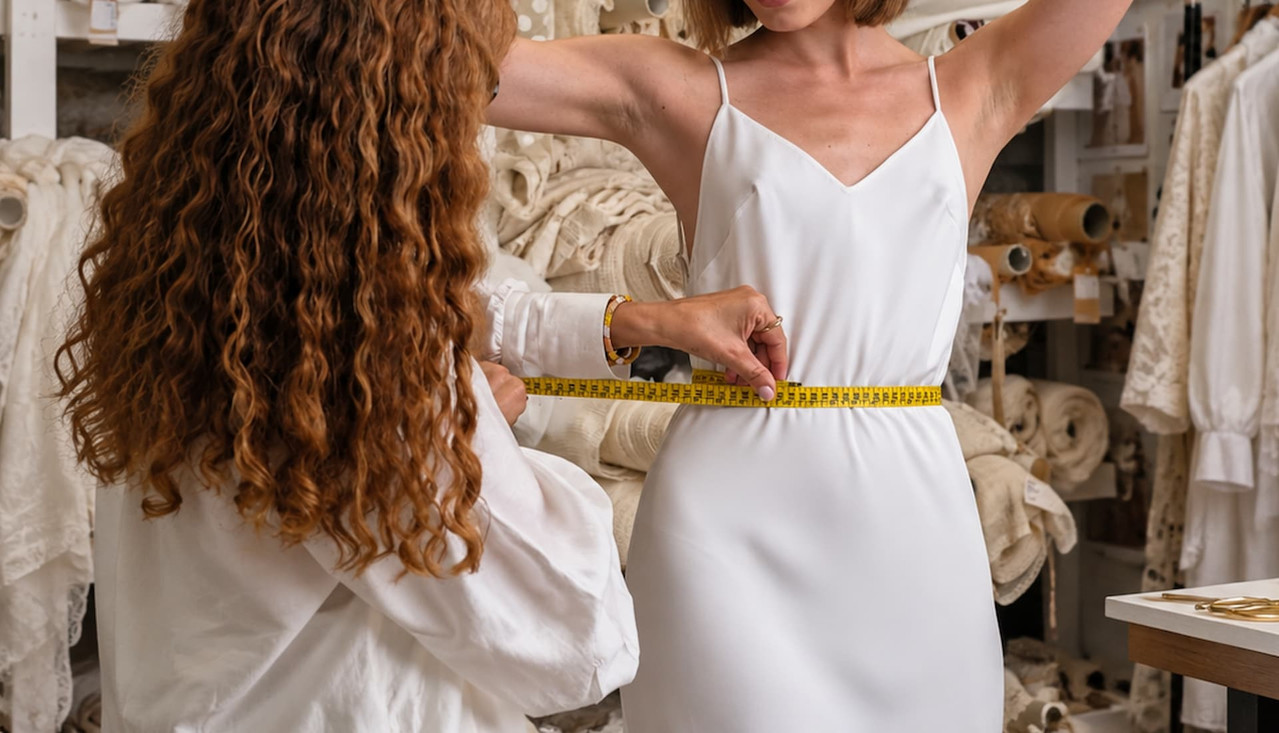
Colours may match, but a wrong fit or lack of defined personal style can make a bad combination.
When Clothes Fit but the Outfit Doesn’t
It is one thing for an item to be the correct size for your measurements, but it can be another thing altogether for it to suit your proportions.
It may be that you have the perfect-fitting shirt, but its hemline, shoulder positioning, or proportions with your trousers may make it appear out of place. Also, it may be that the trousers fit perfectly in terms of sizing but their proportions with a certain top are awkward.
This is not merely about body shape or size. This is about the interplay between length, volume, and shape work together.
What Personal Style Means in Everyday Life
It’s actually easier than it seems to be. Your personal style is the way that you always pick the same things – the same necklines, shapes, colours, and formality levels that you feel good about.
For instance, a person who works from home and likes loose clothes will always buy structured blazers, thinking that they are going to have a certain life some day. Blazers are not bad buys; they just don’t go with the life that you lead now.
Why You Keep Buying Clothes You Barely Wear

It may seem like buying more clothing is the simplest way to fix any wardrobe dilemma, but it frequently makes things even worse.
Shopping for an Imagined Version of Yourself
You can purchase clothes for that version of yourself – the one who goes to more functions, wears suits, works out, or has a sudden passion for prints.
Aspiration is a great thing, but clothes bought for that imaginary you rarely get worn simply because they don’t fit into your life at all.
The One-Piece Trap
Another typical mistake that people often make is purchasing just one standout item and hoping that everything else will come together.
An exciting coat, an odd dress, or even an interesting pair of trousers can look great by themselves. However, without complementary colours or basic pieces, they become isolated items.
When choosing to purchase a fashion accessory, you should always first question yourself:
“Can I create at least three complete outfits with what I already own?”
If not, the purchase may increase your closet, but it may not really expand your wardrobe choices.
How to Build a Wardrobe Where Everything Talks to Everything Else
Being able to put a coordinated wardrobe together is simply a matter of two things that you do prior to reaching for your credit card.
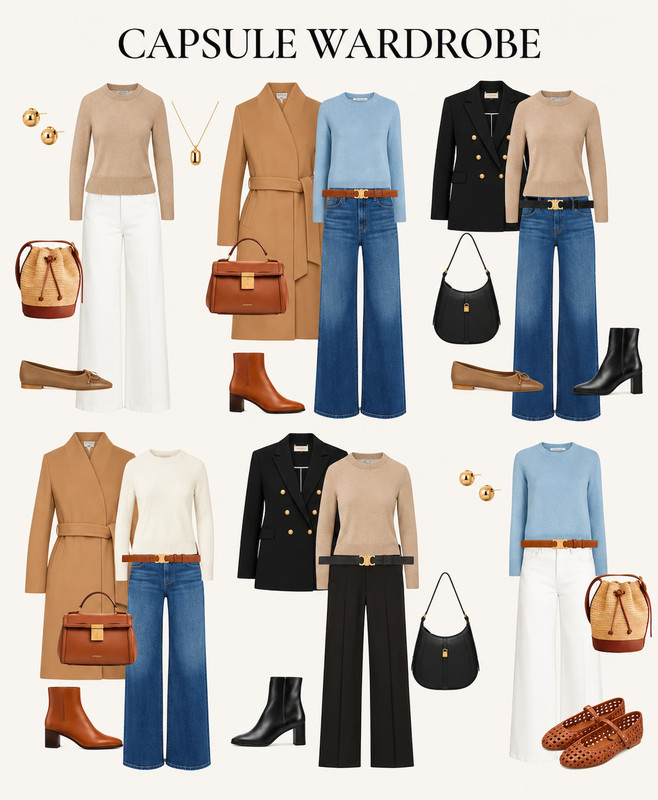
Start From Outfits, Not Items
Don’t just choose the pieces you fall in love with, but imagine how it will all look when put into an outfit.
Whenever something catches your eye, consider what kind of outfit you could wear with that particular piece the next morning, and you should use only the things you have at hand. If you can easily see a couple of full outfits, then it is an excellent choice. If not, it means that it is chosen just for itself.
The "Three Friends" Test Before You Buy
Before buying something, imagine three things you need to coordinate with the purchase – a bottom, a layer, and a pair of shoes. If those three “friends” have not been purchased yet, ask yourself whether you are ready to invest in all four pieces, or maybe it would be best to leave this one in the store. One simple trick will help you avoid building up your wardrobe more than any cleaning spree ever will.
A Simple Framework to Audit Your Existing Wardrobe
If your wardrobe is already bursting at the seams, you don’t have to start from scratch. You just need a checklist.
Step 1 – Pull, Don't Judge
Remove everything from your closet and spread it out across the bed. At this point, you shouldn’t worry about what to keep; the idea is simply to make everything visible. Many people have never really looked at all of their clothes at once before.
Step 2 – Sort Into Three Piles
Three categories should be made: "Core" (wearable regularly, fitting well, and easy to match), "Orphans" (enjoyed, yet not matching anything else), and "Aspirational" (purchased for an imaginary life or body that one does not possess now). Honesty is of great importance here.
Step 3 – Find the Gaps, Not the Excuses
Review your core collection and identify what's absent, not what you desire, but rather what will really link your orphan pieces with the rest of your wardrobe. It usually amounts to one neutral-bottom garment, one versatile outer garment, or one pair of shoes of the correct colour. The purchase of that one connection piece may make available five or six outfit combinations out of garments you previously dismissed as "not going with anything."
The Bottom Line
A closet stuffed with clothing is not the same as a closet filled with outfits, and the misunderstanding of this concept is precisely what leads to the "why do I have nothing to wear (with a full closet)" problem despite all the shopping. And in a sense, this is also the reasoning behind the capsule wardrobe for people who overshop: the solution to the problem lies not in having fewer clothes per se, but in creating a wardrobe where colours, shapes, and styles connect every item to at least a couple of other pieces.
And once this network is created, getting dressed becomes more like doing the math.