

Your Best Colors Can Change Everything: Why Color Analysis Is a Style Game Changer (And How to Find Yours Online)
Discover why color analysis matters, how a detailed online color analysis can work, and how our personalized Color Analysis feature goes beyond a simple four-season result to help you understand the colors that truly complement you.
.jpg)
Your Best Colors Can Change Everything: Why Color Analysis Is a Style Game Changer (And How to Find Yours Online)
Have you ever tried on a color that looked absolutely beautiful on the hanger, only to find that it somehow looked completely different once you wore it?
Maybe your complexion looked brighter in one shade but dull in another. Maybe one shade of pink made your eyes stand out, while another seemed to overpower your face. Or perhaps you have a wardrobe full of colors you love, but only a handful of them ever make you feel truly confident.
The difference often comes down to one thing:
How a color interacts with your natural coloring.
This is exactly what color analysis helps you understand.
Color analysis identifies the color characteristics that harmonize with your natural features, helping you discover shades that complement your complexion, eyes, and overall appearance.
And with a detailed online color analysis, you can explore these characteristics, understand your personal color profile, and receive a palette designed around your unique coloring.
Because finding your best colors shouldn't depend on guesswork.
It should be a process you can understand, use, and return to whenever you need it.
How the Right Colors Can Change Your Look?
.jpg)
Color is one of the first things we notice about clothing.
Before we notice the fabric, the silhouette, or even the details of an outfit, we see color.
And the colors you wear close to your face can influence how your overall appearance comes together.
The right shades can make your complexion appear more balanced, bring attention to your eyes, and create a sense of harmony between your clothing and natural features.
Other shades may appear too intense, too muted, too warm, or too cool in comparison to your natural coloring.
This is why two people can wear exactly the same outfit and experience different results.
A shade that beautifully complements one person may create a different effect on someone else.
Color analysis helps you understand these differences.
Instead of choosing colors based only on trends, personal preference, or how they look on someone else, you begin to understand which color characteristics complement you.
And that knowledge can make everyday styling much more intentional.
From choosing a flattering top to building a coordinated wardrobe, knowing your colors gives you a personalized reference point for making better-informed style decisions.
Color Analysis Is More Than Finding Your “Season”
.jpg)
You have probably come across the four color seasons before.
Spring.
Summer.
Autumn.
Winter.
These seasonal categories are a useful part of color analysis, but understanding your coloring involves much more than identifying a season.
Two people can belong to the same season and still have different color characteristics.
One person may harmonize with clearer, brighter shades, while another may suit softer versions of similar colors.
One may look balanced in deeper shades, while another may look more harmonious in lighter colors.
The reason is simple: color has multiple dimensions.
A detailed color analysis considers characteristics such as:
- Hue — the temperature of a color, from warm to cool.
- Chroma — the intensity or saturation of a color.
- Value — how light or dark a color is.
- Contrast — the difference in lightness and darkness between your natural features.
These characteristics work together to create your individual color profile.
That's why at SilSett, our Color Analysis feature goes beyond assigning you a season.
We look at the characteristics that contribute to your result, helping you understand not just which palette suits you, but why.
Online Color Analysis: A Personalized Approach to Finding Your Best Colors
.jpg)
Your natural coloring can be analyzed through a structured digital process, giving you a practical way to understand your personal color profile.
With SilSett's online Color Analysis feature, you can explore the characteristics of your natural coloring, compare different color dimensions, and discover a palette tailored to your results.
The process is designed to go beyond a quick quiz or a single seasonal label.
It brings together multiple aspects of your coloring, including hue, chroma, value, contrast, and color dominance, to create a more detailed picture of the colors that complement you.
And the best part?
You can explore your color profile online and use your results wherever your style journey takes you.
Whether you're shopping for clothes, building a capsule wardrobe, choosing accessories, or simply trying to understand why certain shades look better on you, your personalized color analysis gives you a useful starting point.
You don't need to rely on trial and error every time you shop.
You can make more informed choices with a better understanding of your natural coloring.
Our Color Analysis: Going Beyond a Simple Color Quiz
We designed SilSett's Color Analysis feature to make understanding your colors a detailed, visual, and practical experience.
Rather than giving you a quick result and leaving you to figure out what it means, the process takes you through different stages of color analysis.
Each stage focuses on a specific aspect of your natural coloring and contributes to your overall color profile.
Your analysis explores:
- Natural hair color
- Natural eye color
- Chroma
- Hue
- Personal color preferences
- Value
- Contrast
- Color dominance
- Season comparison
- Your final color season
- Your personalized palette
- Colors to prefer and avoid
- Evidence review
Every step adds another layer of understanding.
By the end, you have more than a seasonal label.
You have a personalized color reference that can help you make sense of your wardrobe, recognize suitable shades, and approach styling with greater confidence.
Let's walk through how it works.
1. Start With the Right Photos
.jpg)
Your color analysis begins with your photographs.
You can upload up to three images and select the one that is most suitable for your analysis.
Photographs provide the visual starting point for understanding your natural coloring, which is why choosing suitable images is an important part of the process.
The goal is to capture your natural features as clearly as possible, rather than relying on heavily edited images or photographs that significantly alter your appearance.
For the most useful results, choose clear photographs with good, even lighting and minimal filters.
A suitable photograph helps provide a more consistent visual reference for the analysis.
Think of this step as the foundation of your color profile.
The better the visual information, the more useful it is for the analysis that follows.
2. Understanding Your Natural Hair Color
-(2).jpg)
Next, we look at your natural hair color.
Hair color contributes to your overall coloring, and understanding its characteristics helps build a more complete picture of your natural appearance.
But hair color isn't always as simple as choosing between broad categories such as brown, blonde, or black.
Brown hair, for example, can range from light and ashy to warm, rich, and deep.
Blonde hair can be golden, beige, cool, or muted.
Even black hair can have different visual qualities depending on its depth and undertone.
Our feature provides a detailed range of hair color references, allowing you to select the shade that most closely matches your natural hair color.
This helps establish another important element of your color profile.
The objective is to understand your natural coloring and how its characteristics contribute to your overall color harmony.
3. Understanding Your Natural Eye Color
.jpg)
Your eyes are another important part of your natural coloring.
And just like hair, eye color has more variation than we often realize.
Blue eyes can appear soft, bright, greyed, or clear.
Brown eyes can range from light and warm to rich and deep.
Green eyes can have different levels of clarity and intensity.
Hazel eyes may contain a combination of several color characteristics.
These differences contribute to the way your natural features come together.
That's why SilSett's Color Analysis feature includes detailed visual references to help you identify the closest match to your natural eye color.
By understanding your eye color alongside your hair and other natural features, the analysis builds a more complete picture of your coloring.
It's another step toward understanding which colors complement you.
4. Chroma: How Much Color Intensity Can You Carry?
.jpg)
One of the most useful concepts in color analysis is chroma.
Chroma refers to the intensity or saturation of a color.
Some people harmonize with clear, vivid, highly saturated colors.
Others look more balanced in softer, muted, and less intense shades.
Understanding your chroma helps you recognize the difference between colors that may belong to the same family but create very different effects when worn.
For example, two pinks may have a similar hue, but one may be bright and vivid while the other is soft and muted.
Both may be beautiful colors, but they won't necessarily create the same visual harmony with your natural features.
SilSett's Color Analysis feature allows you to visually compare different chroma levels and explore which level best complements your coloring.
This is especially useful when choosing between bright and muted versions of your favorite colors.
You don't have to stop wearing the colors you love.
Instead, understanding your chroma helps you recognize which versions of those colors are more harmonious with your natural features.
And that knowledge gives you more flexibility when styling your wardrobe.
5. Hue: Warm, Cool, or Somewhere In Between?
.jpg)
Next comes Hue Analysis.
Hue refers to the color family and, in personal color analysis, its temperature is often explored through warm and cool comparisons.
Warm colors generally have yellow, golden, or orange-based qualities.
Cool colors tend to have blue-based qualities.
Some people harmonize more strongly with warmer shades, while others look more balanced in cooler colors.
There are also people whose coloring has a more neutral quality, allowing them to wear a broader range of warm and cool shades.
SilSett's Hue Analysis uses visual comparisons to help you explore these differences and understand the temperature that best complements your natural coloring.
This is particularly helpful when choosing between similar shades.
Think about warm beige versus cool grey, peachy pink versus blue-based pink, or golden brown versus ash brown.
Knowing your hue direction gives you a clearer reference when making these decisions.
Instead of guessing which version to choose, you can use your color profile to guide your selection.
6. Your Personal Color Preferences

Your color analysis is about understanding color harmony, but your personal style should always reflect who you are.
That's why SilSett's Color Analysis feature also allows you to select colors you personally enjoy wearing.
You can choose your preferred colors or skip this step entirely.
And here's an important distinction:
Your personal color preferences do not determine your Hue Analysis result.
The purpose of this step is to understand your preferences, not to change the characteristics identified through your analysis.
Your favorite color is a matter of personal taste.
Your color harmony is explored through the analysis of your natural coloring.
Sometimes, the two will align perfectly.
Other times, you may discover new versions of your favorite colors that complement you in different ways.
This information can help you approach your wardrobe with more flexibility.
You don't have to choose between wearing colors that suit you and wearing colors that express your personality.
You can understand both and decide how you want to bring them together.
7. Value: Light, Medium, or Deep?
.jpg)
Another important dimension of color analysis is value.
Value refers to the relative lightness or darkness of a color.
Some people harmonize with lighter shades.
Others look balanced in medium-depth colors.
And some naturally complement deeper, richer shades.
Understanding your value helps you recognize the color depth that works well with your natural coloring.
For example, two people may both have warm coloring, but one may look more harmonious in light, warm peach shades, while another may suit deeper, richer terracotta tones.
The difference isn't necessarily the hue.
It may be the value.
SilSett's Value Analysis allows you to visually compare different levels of lightness and darkness to better understand your color profile.
This is especially useful when choosing between lighter and darker versions of the same color family.
Because finding your best colors isn't just about choosing warm or cool shades.
It's also about understanding the depth that complements you.
8. Contrast: Understanding the Difference Between Your Features
.jpg)
Next, we look at contrast.
Contrast describes the difference in lightness and darkness between elements of your natural coloring.
Think about your skin, hair, and eyes.
Are these features relatively close in lightness and darkness?
Or is there a noticeable difference between them?
For example, someone with very dark hair and light skin may have naturally high contrast.
Someone with light hair, light eyes, and a similarly light complexion may have lower contrast.
Others may fall somewhere in between.
SilSett's Contrast Analysis uses a grayscale view to help you focus on these differences.
By removing color, the comparison makes it easier to observe the relative lightness and darkness of your natural features.
Understanding your contrast can help you make more intentional outfit choices.
For instance, it can guide you when deciding whether to combine strongly contrasting colors or create a softer, more blended look.
It's another useful piece of information that helps you understand how different color combinations may work with your natural coloring.
9. Color Dominance: What Matters Most?
.jpg)
This is where your color analysis brings different characteristics together.
Your natural coloring isn't made up of completely separate dimensions.
Hue, chroma, and value interact with one another to create your overall appearance.
That's why understanding color dominance is an important part of building your color profile.
Color dominance explores which of these characteristics has the strongest influence on your overall coloring.
The three key dimensions are:
- Hue — color temperature
- Chroma — color intensity
- Value — lightness or darkness
One characteristic may be more dominant in your coloring, while another plays a supporting role.
Understanding this relationship helps explain why people with seemingly similar coloring can still have different ideal palettes.
For example, two people may both have cool coloring, but one may harmonize more with bright, clear colors while the other may suit softer, lighter shades.
Their hue direction may be similar, but their chroma or value characteristics can create different results.
By exploring color dominance, SilSett's Color Analysis feature helps you understand the characteristics that contribute to your final seasonal result.
It takes you beyond simply knowing your season.
It helps you understand the color characteristics behind it.
10. Comparing Your Color Seasons
.jpg)
Once the different color characteristics have been explored, the analysis moves into season comparison.
This is where the individual elements of your color profile begin to come together.
Rather than looking at your coloring through a single characteristic, you can compare different seasonal palettes and explore how they relate to your natural features.
This visual comparison helps make the process easier to understand.
You can see how different color families, intensities, and depths may create different effects in relation to your coloring.
The purpose is to narrow down the seasonal options that align with the characteristics identified throughout your analysis.
Because a useful color analysis should give you more than a season name.
It should help you understand how that result connects to your individual coloring.
11. Your Final Color Season
After exploring the different characteristics of your natural coloring, the analysis brings those observations together into your final color season.
But your result isn't simply a seasonal label.
It also brings together the characteristics that contribute to your color profile, including elements such as undertone, depth, and chroma.
This additional context makes your result more useful in everyday styling.
For example, knowing that you belong to a particular season gives you a broad understanding of your color family.
But understanding whether your coloring is cool, deep, and clear gives you a more specific reference when choosing individual shades.
This is what makes a detailed color profile valuable.
You begin to recognize the characteristics that connect your natural coloring to your personalized palette.
And the more familiar you become with those characteristics, the easier it becomes to identify suitable colors when shopping or putting outfits together.
12. Your Personalized Color Palette

This is where your color analysis becomes something you can use every day.
Your personalized palette brings the findings of your analysis together into a practical color reference.
It includes different color options and distinguishes between important categories such as accent colors and neutrals.
Your palette is designed to help you recognize colors that align with your natural coloring and use them more intentionally throughout your wardrobe.
You can refer to it when:
- Shopping for clothes
- Choosing between similar shades
- Building a capsule wardrobe
- Selecting accessories
- Planning outfits
- Choosing makeup colors
- Shopping online
- Dressing for important occasions
- Creating a more coordinated wardrobe
Imagine having a better idea of which pinks, blues, browns, greens, and neutrals complement your natural coloring.
Instead of starting from scratch every time you shop, you have a personalized reference to guide your decisions.
And the more you use your palette, the more familiar you become with your own color preferences and patterns.
Your personalized color palette isn't just a collection of pretty shades.
It's a practical styling tool you can return to whenever you need it.
13. Prefer, Avoid & Evidence Review
.jpg)
Your color analysis doesn't end with your final palette.
SilSett's Color Analysis feature also includes sections for Prefer, Avoid, and Evidence Review.
These sections add further context to your results and help you explore the observations and recommendations associated with your color profile.
The Prefer and Avoid sections give you additional guidance when identifying colors to prioritize or approach more thoughtfully.
The Evidence Review section provides another point of reference for understanding the analysis and its findings.
Together, these elements help turn your color profile into something you can revisit as your wardrobe evolves.
Because the value of color analysis isn't just in discovering your colors once.
It's in having a useful reference that supports your future styling and shopping decisions.
What Do You Actually Get From a Color Analysis?
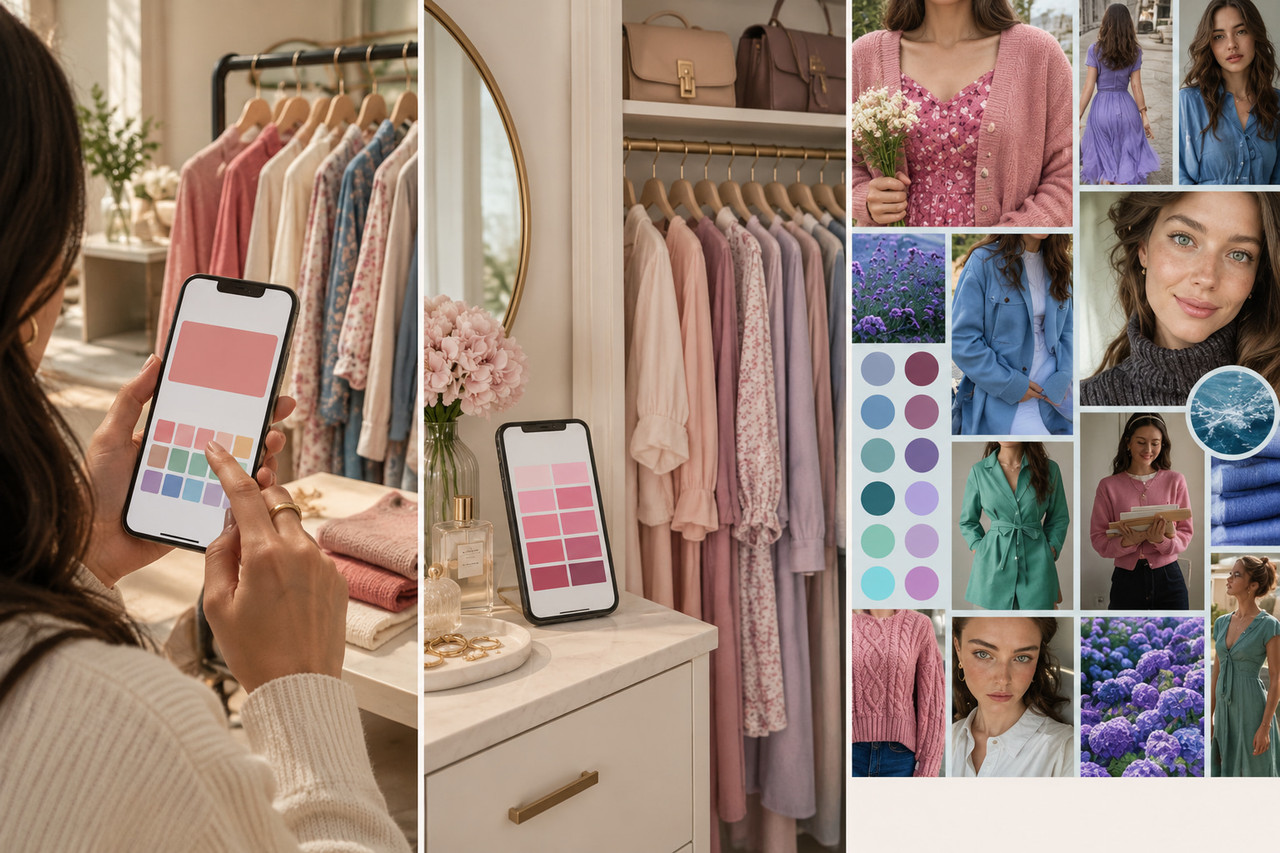
The real benefit of color analysis isn't having a beautiful color chart saved on your phone.
It's knowing how to use that information in your everyday life.
Once you understand your color profile, you begin to recognize patterns in the shades you wear.
You can identify why certain colors make your features stand out while others create a different effect.
You become more familiar with the difference between warm and cool shades, bright and muted colors, and light and deep tones.
You can make more informed choices when shopping.
You can build a wardrobe around colors that work well together and complement your natural coloring.
And you may even discover versions of your favorite colors that you hadn't considered before.
Most importantly, you gain a personalized reference for making color decisions.
Instead of relying entirely on guesswork, you have a better understanding of what to look for.
Color Analysis Can Make Shopping Easier
.jpg)
Imagine seeing two almost identical tops online.
One is a slightly cooler pink.
The other is warmer.
Previously, you might have chosen whichever one looked better on the model or in the product photograph.
But with your personalized color palette, you have another useful reference.
You can ask yourself:
"Which version is more harmonious with my coloring?"
The same applies when choosing between different shades of beige, brown, red, blue, green, and pink.
Your palette helps you narrow down your options and recognize the color characteristics that complement you.
Over time, you may begin to identify your preferred shades more naturally.
This can be especially helpful when shopping online, where you often have to make decisions based on product images rather than trying clothes on in person.
While the appearance of colors can vary across screens and lighting conditions, your palette gives you a starting point for comparing shades and making more informed choices.
You don't need to memorize every color.
You simply need to become familiar with the characteristics that work well with your natural coloring.
And that's what makes color analysis such a practical addition to your styling journey.
Color Analysis Isn't About Rules
One of the most valuable things to understand about color analysis is that your palette is a guide, not a set of restrictions.
Knowing your colors doesn't mean you have to stop wearing every shade outside your palette.
If you love black, you don't have to throw away your black clothes.
If you love pink, you don't have to stop wearing pink.
And if your favorite color isn't one of your most harmonious shades, that doesn't mean you can never wear it again.
Color analysis is about understanding your natural coloring so you can make more intentional style decisions.
You can choose your most harmonious colors when you want a balanced look.
You can experiment with other shades when you want to express a particular mood or style.
You can move certain colors away from your face, combine them with other shades, or use them in accessories.
You can also choose colors simply because you love them.
Your personal style should always leave room for creativity.
The goal of color analysis is to give you more information, not fewer choices.
The more you understand your colors, the more confidently you can decide how you want to wear them.
The Real Benefit? You Stop Guessing.
Imagine approaching your wardrobe with a better understanding of your natural coloring.
Instead of wondering:
"Why do I look tired in this color?"
You can begin to recognize that the shade may be too muted, too intense, too warm, or too deep for the look you want to create.
Instead of asking:
"Why does this pink look so much better than that pink?"
You can understand the role of temperature, intensity, and depth.
Instead of wondering:
"Which neutral should I buy?"
You have a personalized reference that helps you identify neutrals that align with your color profile.
These small insights can make a meaningful difference in how you approach your wardrobe.
You become more intentional when shopping.
You develop a better understanding of the colors you wear.
And you have a reference that helps you make decisions based on your own natural coloring rather than relying entirely on trends, store lighting, mannequins, or someone else's styling choices.
Your style becomes more personal when your color choices are informed by you.
Your Colors Are Already There. We Help You See Them.
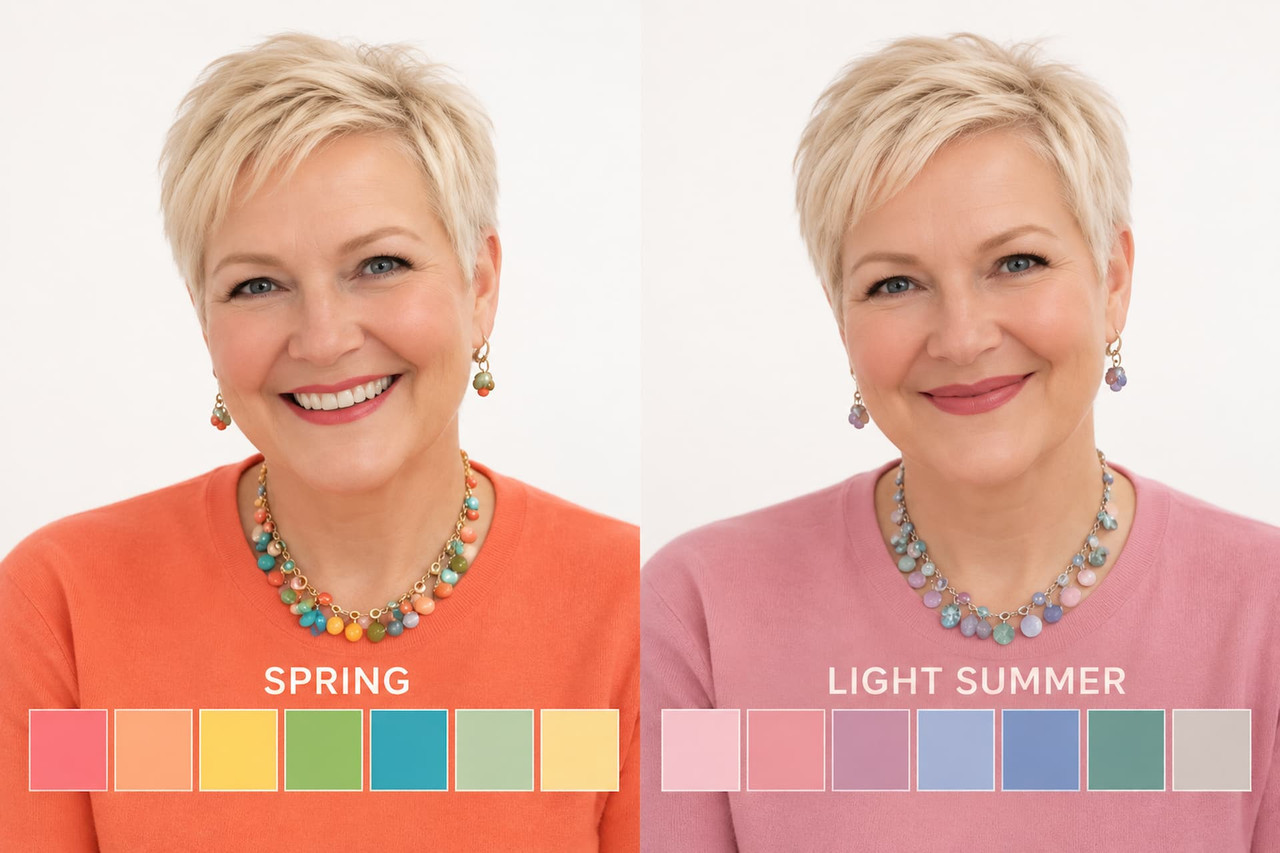
Color analysis doesn't change your natural coloring.
It helps you understand it.
Your natural hair.
Your eyes.
Your complexion.
Your contrast.
Your depth.
Your chroma.
Your hue.
All of these characteristics contribute to your unique coloring.
And understanding how they work together can change the way you approach personal style.
You begin to recognize the shades that complement your natural features.
You understand why similar colors can create different effects.
You have a clearer reference when shopping, styling outfits, or building a more coordinated wardrobe.
That's why SilSett's Color Analysis feature brings together multiple color characteristics to create a personalized color profile and palette.
The process is designed to go beyond a quick quiz or a four-season label.
It gives you a structured way to explore your natural coloring, understand your result, and apply that knowledge to your everyday style.
Because your best colors shouldn't have to be a guessing game.
They should be something you can understand, recognize, and use.
Ready to Discover Your Colors?
We've designed SilSett's Color Analysis feature to help you go beyond a simple "What's my season?" result.
From your natural hair and eye color to hue, chroma, value, contrast, and color dominance, each step contributes to your personalized color profile.
You'll explore your color characteristics, compare seasonal palettes, and receive a personalized reference to help you make more informed styling and shopping decisions.
The goal isn't simply to tell you what season you belong to.
It's to help you understand why certain colors complement you, how to recognize them, and how to use them in your everyday style.
Your wardrobe deserves more than guesswork.
Your colors are personal. Your analysis should be, too.