What is a Capsule Wardrobe? The Simple System Behind a Better Closet
Discover what a capsule wardrobe is, which essentials to include, and how to create a versatile wardrobe with fewer, better-matched pieces. Learn simple steps to build a closet that suits your lifestyle and makes everyday dressing easier.
What is a Capsule Wardrobe? The Simple System Behind a Better Closet
You go to your closet and find a lot of clothes there: a shirt that you purchased when it looked nice at the store, pants that you have worn only two times, a coat that you are keeping for the "perfect occasion," and other clothing items that never get worn.
However, even when you have to dress up, it feels like you do not have anything to wear.
That is precisely what a capsule wardrobe is meant to achieve. It is not just about owning less clothing or filling up your closet with nothing but beige clothing. It is all about developing a wardrobe that functions as a cohesive whole.
Rather than focusing on acquiring separate pieces of clothing, you begin forming outfits. This one small difference can make it feel like your wardrobe is twice its size.
Capsule Wardrobe 101: It’s About Connections, Not Just Fewer Clothes
A capsule wardrobe includes a thoughtfully selected group of garments that are designed to be mixed and matched for several different looks. There is no set number of items in a perfect wardrobe. Your capsule wardrobe will depend on your personality and circumstances.
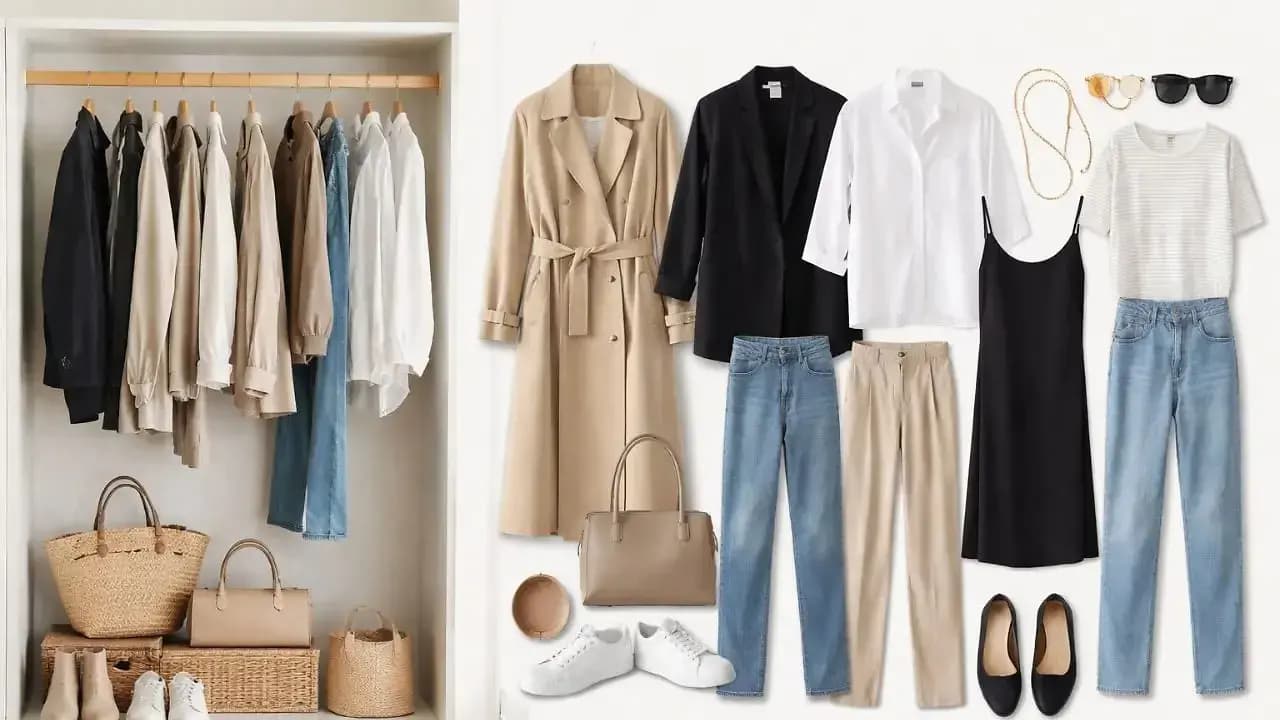
While ten tops and ten bottoms may have one hundred combinations in theory, mismatched colours and styles keep the number of combinations small. Having fewer clothing items that mix and match well can help you create more outfits. This is truly the concept of a capsule wardrobe.
Why Everyone's Switching to Fewer, Better Clothes
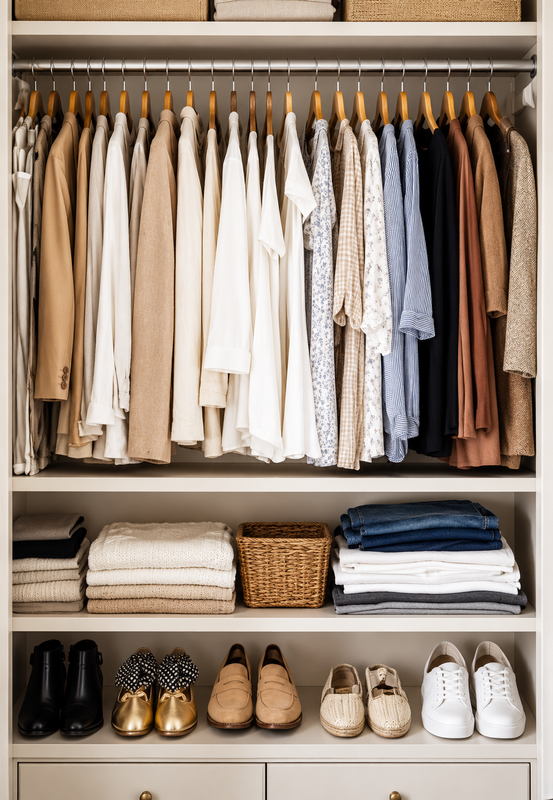
It is not all about having your wardrobe organised. It is more about how easy it is to put on your clothes.
When your wardrobe contains many items that do not complement one another, getting dressed becomes more complicated because you have to figure out which clothes and shoes work together.
A thought-out wardrobe makes that a little easier.
Your everyday clothes already work well together. Your pants can be used with more than one shirt. Your coat matches your pants and your dress. Your shoes will match different styles of clothing.
This is why capsule wardrobe essentials are usually multifunctional rather than very particular.
Although a simple white shirt may look plain on its own, it can be worn with blue jeans, tailored trousers, skirts, and jackets.
Its value lies in the number of outfits you can create with it.
The Magic Number: How Many Pieces Do You Really Need?
 InstagramView the referenced post on Instagram.Open post on Instagram
This is when many people overthink their capsule wardrobe. You might come across lists recommending 30 pieces, 33 pieces, or some other number. However, there is no magic number of pieces for all people. What you need to do is analyse your week.
If you work in an office five days a week, your wardrobe will look different from that of someone who works from home. If you live in a warm climate all year round, you will need fewer layers than someone living in a cold climate during winter.
First, consider the clothes that you actually wear.
A practical wardrobe might include:
- Everyday tops and shirts
- Jeans or trousers
- Dresses or skirts, if you wear them
- One or two versatile jackets
- Knitwear or layering pieces
- Everyday and occasion shoes
- Seasonal clothing where necessary
The question is not, "How few clothes can I own?"
Instead, ask yourself, "How many clothes do I really need to create the outfits I want?" That is a far more practical starting point.
Building Your Base: The Color Palette That Makes Everything Match
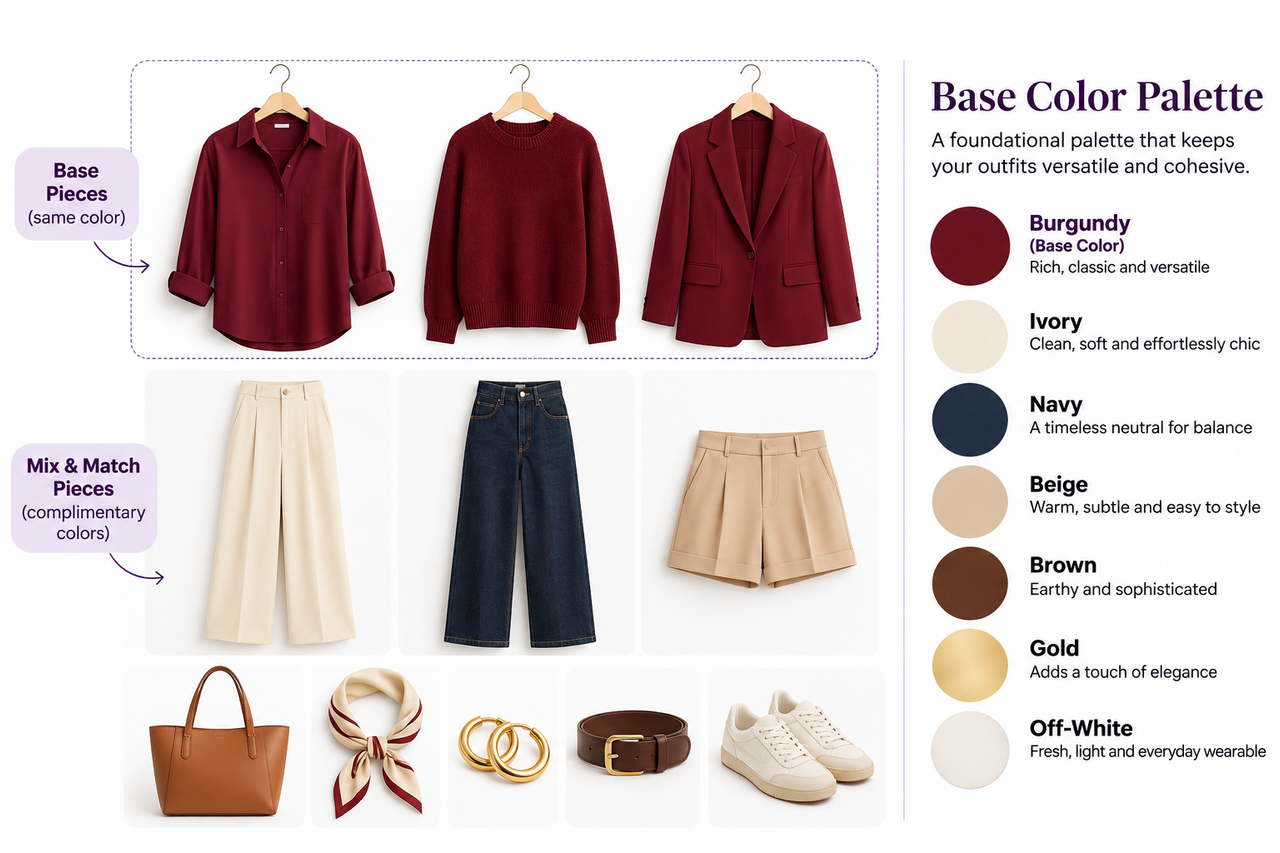
Colour forms one of the most important elements determining whether your wardrobe becomes simple or complicated for you. It is not necessary to dress in only neutral colours. You just need colours that relate to each other.
The first step will be to select two or three colours which you wear on a regular basis. This may include black, blue, white, grey or brown. The second step is to select two colours which you like to wear.
To illustrate, a closet that is based on navy, cream, and denim colours may comfortably include burgundy, olive or soft pink as accents.
That does not mean everything needs to match perfectly. It simply means avoiding purchases, such as an attractive blouse, that do not work with anything else in your wardrobe.
The Three-Piece Colour Test
Have a glance at your belongings before going out to buy anything new.
Can you pair the new piece with at least:
- One bottom
- One layering piece
- One pair of shoes
If you can’t, take time to consider before purchasing it.
You may still choose to buy it, but at least you will understand why you are making that decision instead of adding another item that does not work with the rest of your wardrobe.
The Only Checklist You Need to Build Yours
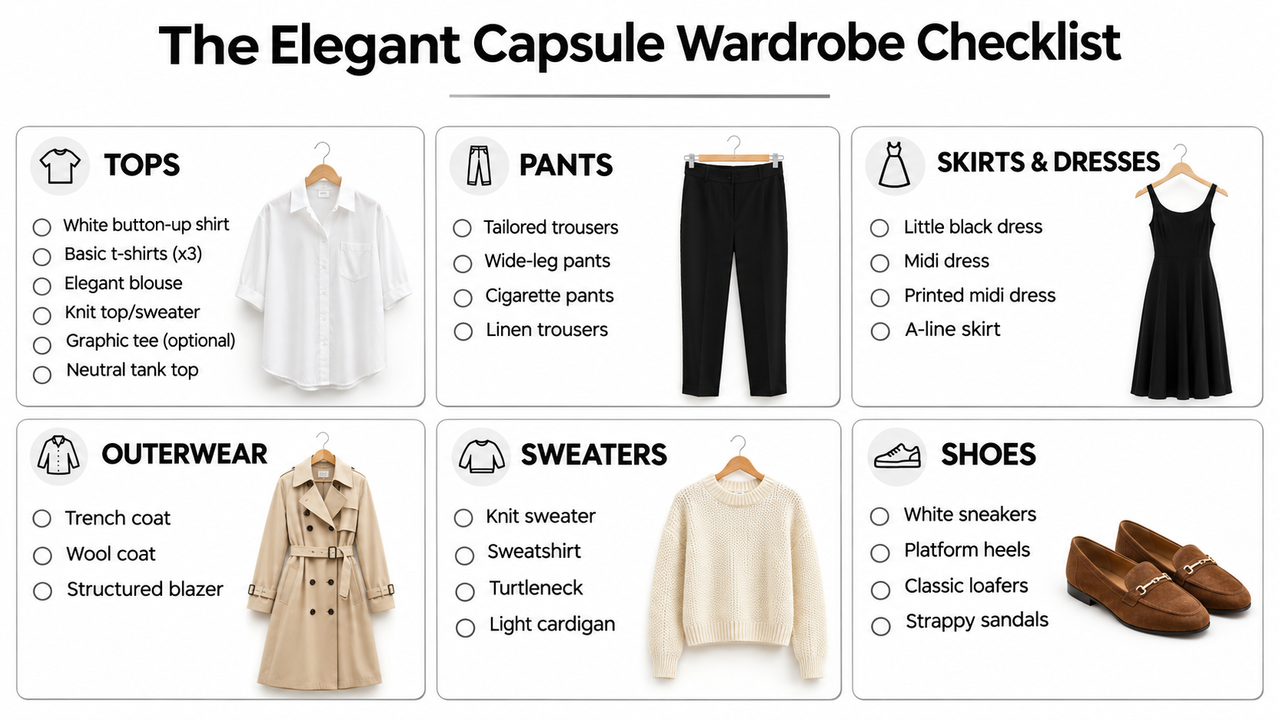
You do not need to spend a lot of money or change your entire wardrobe to get started. Just start with the clothes you already own.
Look for pieces that:
- Fit comfortably
- Work with your current lifestyle
- Are worn regularly
- Match several other items
- Can be styled for more than one occasion
- Reflect the way you actually like to dress
Then separate everything into three groups: Core, Occasional and Orphan.
Core items are clothes that you wear all the time and which can be mixed and matched easily. The occasional items can comprise fancy dresses or formal clothes that you may actually need at certain times. Orphan items are clothes you like individually but struggle to coordinate with the rest of your wardrobe. Orphan items don’t necessarily have to be disposed of from your closet.
From Chaos to Capsule: A Step-by-Step Plan

If you are wondering how to build a capsule wardrobe, do not start by shopping. Start by auditing.
Step 1: Pull Everything Out
Remove everything from your wardrobe and place it somewhere you can see it.
You will realise that you have five similar black tops, three jeans that you do not even wear, or many things that you had completely forgotten about.
Seeing everything as a whole makes it easy to identify patterns.
Step 2: Find Your Real Uniform
Notice the clothes you are continuously drawn to. You could be wearing straight-legged jeans, baggy shirts, and sneakers. You could also choose to wear trousers, fitted shirts, and loafers.
These everyday choices reveal more about your personal style than any trend ever could.
Construct your capsule based on the information.
Step 3: Create Outfits Before Buying Anything
Select from your preferred designs to create complete looks.
Do not be satisfied with the "this top is nice" mentality. Try to make a couple of outfits using what you already own.
Even if you do not buy anything new, this exercise will help you discover more outfit combinations using the clothes you already own.
Step 4: Shop Only for the Missing Connections
When you have identified what is needed, make a short shopping list.
Maybe you do not require five tops. Maybe what you actually require is just a single neutral pair of pants to match your four tops.
That one purchase can be more useful than five unrelated additions.
Mistakes That Can Quietly Ruin Your Capsule Wardrobe
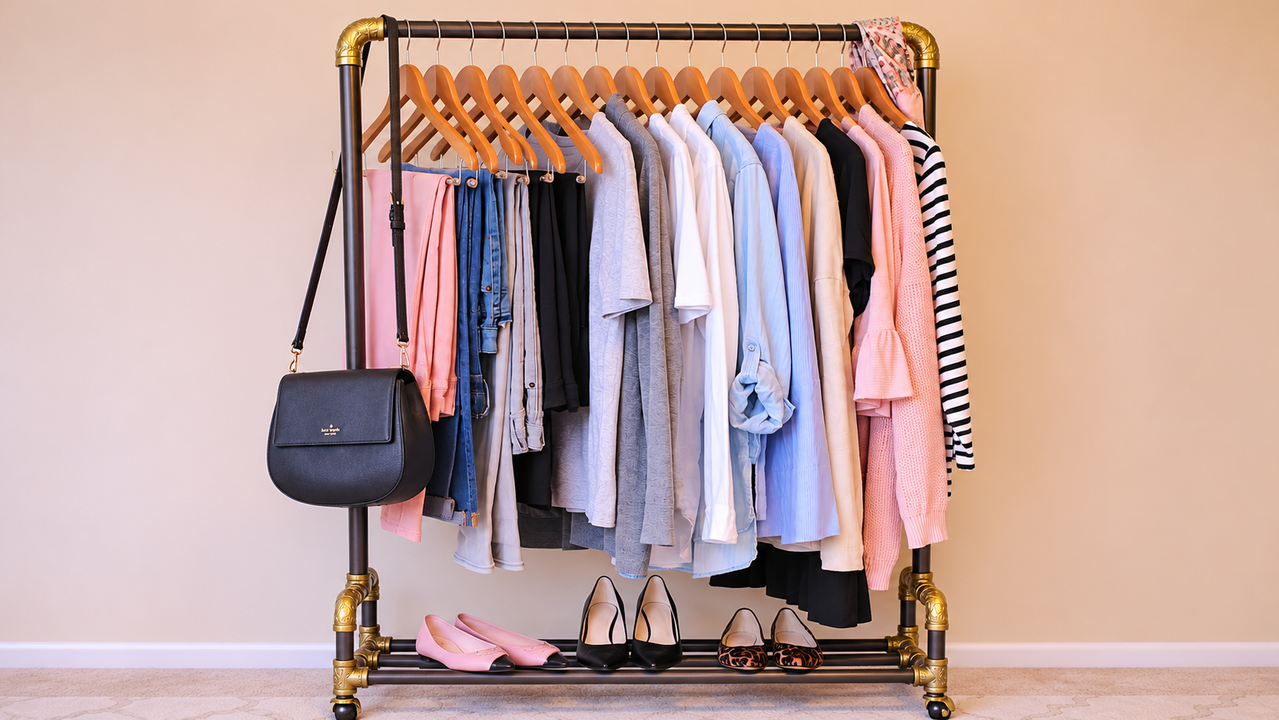
One of the biggest mistakes is treating a capsule wardrobe as a rigid uniform. If you do not like white shirts, there is no reason to wear one simply because someone says it is an essential wardrobe item. Another common mistake is trying to buy everything for your capsule wardrobe at once.
You can also buy clothes for an imaginary lifestyle. Perhaps you purchase formal dresses because you think you will attend more events or structured blazers because you imagine becoming more corporate. There is nothing wrong with aspiration, but the clothes you wear most should support the life you actually live.
Finally, do not remove all personality from your wardrobe. A patterned scarf, colourful jacket or distinctive accessory can still belong if it works with several existing pieces.
Still Not Sure Where to Start? Let a Stylist Build It With You
In some cases, the challenge is not deciding what to remove, but figuring out what your wardrobe actually needs. Online wardrobe and styling platforms can help you assess your existing pieces, explore suitable colours and silhouettes, and identify gaps based on your lifestyle. You can also use digital wardrobe apps to track what you wear most often and spot patterns in your choices.
Build your wardrobe around those favourites, identify genuine gaps and use shopping platforms only when you need something specific. The best capsule wardrobe for beginners is not about owning the fewest clothes. It is about choosing versatile pieces that work well together and make getting dressed easier.